Walking the Wicklow Way, B&B to B&B
Walking the Wicklow Way is Ireland's classic week on foot, and a string of B&B villages means you can do it with a daysack, a cooked breakfast and a real bed every night.
Walking the Wicklow Way takes you roughly 127 kilometres from Marlay Park on the south side of Dublin to Clonegal in County Carlow, and most people walk it southbound over five to seven days, sleeping in villages like Roundwood, Laragh and Shillelagh along the way. Done B&B to B&B it becomes a very civilised sort of adventure, hard days over open mountain with a cooked breakfast behind you and a warm bed ahead.
You do not need to be a mountaineer either. The route asks for steady fitness, decent gear and a little planning, and it repays them with the best week of walking on the east coast, granite hills, deep forestry, two of Ireland's finest glens and pubs that expect wet jackets at the door.
What the Wicklow Way actually involves
The Wicklow Way is Ireland's oldest waymarked trail, open since 1980, and it has earned its reputation. From the suburbs of Dublin it climbs into the Dublin Mountains, crosses the high open ground around Djouce and White Hill, drops through Glendalough and Glenmalure, then softens into farm lanes and forest tracks on the run south into Carlow. Underfoot you get forest road, boardwalk, mountain path and stretches of quiet tarmac, all marked with the yellow walking-man posts, so route-finding is straightforward whenever visibility is decent.
The climbing is the part that surprises people. Total ascent over the full route comes to roughly 3,000 metres, spread unevenly, with the biggest days in the northern half. White Hill, at about 630 metres, is the highest point of the trail, and the boardwalk over its shoulder gives long views across Lough Tay to the Irish Sea. Daily distances run between about 15 and 22 kilometres depending on how you split the stages. None of it is technical, but it is a genuine hill walk rather than a ramble between villages, and a few training weekends beforehand pay for themselves by day three.
The trail is popular without being crowded. On a fine June weekend you will pass other walkers all day around Glendalough, then have the southern stages nearly to yourself. Marker posts appear reliably at every junction and phone coverage holds along most of the route, so solo walkers manage the Wicklow Way happily, provided they respect the weather on the high ground and keep an eye on the daylight.
Wicklow Way stages built around B&B villages
Planning Wicklow Way stages around B&B villages is mostly a solved problem, because beds cluster roughly a day's walk apart for the whole length of the route. Night one usually falls around Knockree or Enniskerry after the opening leg from Marlay Park, and plenty of walkers book a B&B in Dublin for the night before, so the first morning starts fresh at the trailhead. Night two is Roundwood, reached over Djouce and White Hill on the biggest climbing day of the week. Night three is Laragh, right beside Glendalough, a deliberately short day that leaves the afternoon free for the monastic city.
Night four lands in Glenmalure, the long glaciated valley under Lugnaquilla, and from there the country turns gentler. Night five sits around Iron Bridge or Moyne, and Tinahely itself, a couple of kilometres off the Way, is a common stand-in with beds and food in the village. Night six is Shillelagh, and Clonegal arrives on the seventh day. Fitter walkers merge the easier southern stages and finish in five or six. A few of the southern beds lie a little off the trail, and B&B owners in Wicklow are well used to collecting walkers from the crossing points and dropping them back after breakfast, so mention it when you book.
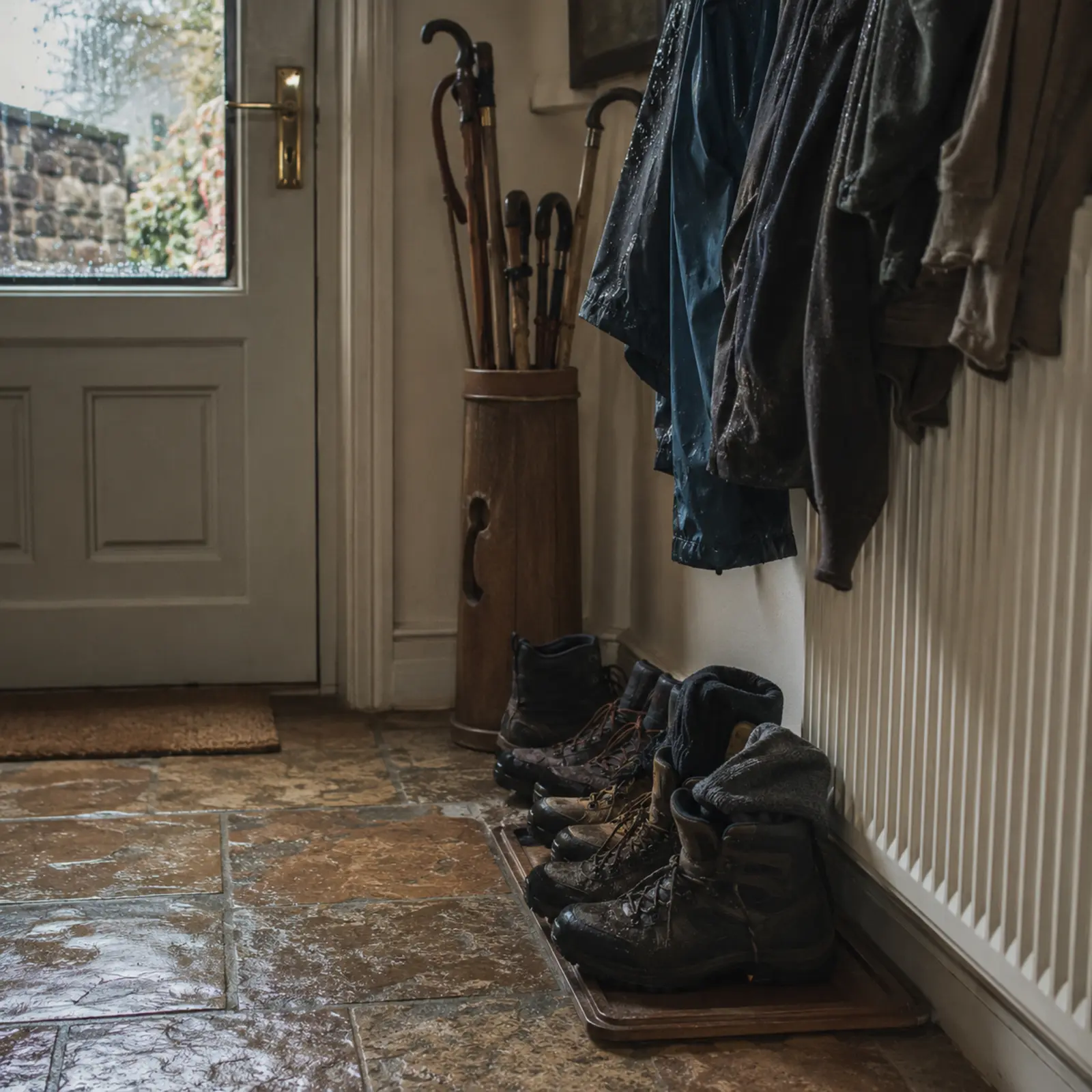
Wicklow owners see walkers all season, muddy boots and early starts are expected.


Walker-friendly beds
Why B&Bs suit walking the Wicklow Way
Camping and hostels both have their place, but B&Bs quietly solve the three problems every long-distance walker carries, wet gear, a big appetite and tired legs.
On a week-long walk the accommodation is not a detail, it is half the trip. After six hours over Djouce in the rain, the difference between a soaked tent and a warm room with a radiator and a cooked breakfast in the morning is often the difference between finishing the Wicklow Way and packing it in on day three.
On a week-long walk the accommodation is not a detail, it is half the trip.
Irish B&Bs are built for exactly this. Owners along the route see walkers all season and organise themselves around them, early breakfasts before a long stage, drying space for boots and jackets, packed lunches made up the night before, and lifts to and from the trail where the beds sit a little off the Way. Ring ahead and most will happily move breakfast to seven, or point you at the safest line off the hill if the forecast turns.
- An early cooked breakfast sets up a six-hour day over the hills
- Radiators and drying space rescue soaked boots and jackets overnight
- Owners near the quieter southern stages will often collect you from the trail
- Luggage transfer runs the full route, so you walk with only a daysack
- A hot shower and a real bed after Djouce beat any campsite in the rain
Glendalough and the Spinc, the heart of the Wicklow Way
Glendalough is the centrepiece of the week, and staying in Laragh puts it on your doorstep. The monastic settlement with its round tower and stone churches sits ten minutes from the village, and the two lakes above it fill the valley the trail drops into. Crowds gather at the car parks by mid-morning, which is exactly why sleeping in Laragh works so well, you see the valley at its quietest in the evening and again before the coaches arrive.
If your legs allow one detour on the whole route, make it the Spinc. The boardwalk ridge climbs high above the Upper Lake and gives the finest viewpoint in the county, a loop of two to three hours from the valley floor. Plenty of walkers book two nights in the same Laragh B&B and take a rest day here, which splits the week neatly in half and gives the legs a fighting chance for Glenmalure and the south.
Glenmalure deserves a word of its own. Often called the longest glaciated valley in these islands, it runs dead straight under Lugnaquilla, at 925 metres the highest mountain in Leinster, and the night spent there feels properly remote after the busyness of Glendalough. For plenty of walkers it turns out to be the favourite stop of the week.
Kit and weather for the Wicklow Way
Kit for the Wicklow Way is standard Irish hillwalking gear rather than anything exotic. Worn-in waterproof boots matter most, because stony mountain paths alternate with boggy stretches that never fully dry out. Pack a proper rain jacket and trousers, warm layers even in July, a hat and gloves for the high ground, and more socks than seems reasonable. The waymarking is good, but keep the route on your phone with a backup battery, since mist on Djouce can cut visibility to a few metres in any month of the year.
Food needs a little thought too, as several stages pass nothing at all between villages. Ask your B&B about a packed lunch the evening before, most owners will happily sort one, and carry more water than the Irish climate suggests you should need. Midge repellent earns its place from June to September, especially on still evenings around the forest sections. If one big summit day appeals more than a week of steady walking, climbing Croagh Patrick is the other great Irish walking pilgrimage, though the Wicklow Way rewards the slower approach.
When to walk the Wicklow Way
May, June and September are the best months to walk the Wicklow Way, with long daylight, drier ground and quieter trails than the July and August peak. High summer works perfectly well too, just book further ahead, because villages like Laragh and Roundwood hold a limited number of rooms and weekends fill fast. Winter is for experienced hillwalkers only, since short daylight turns the longer stages into a race and some of the smaller B&Bs close for the season.
Whichever month you pick, book every night before you start rather than chancing it day by day. The villages are small, and if a bed falls through there is no backup for miles. Knowing how to choose a B&B in Ireland helps here, and on this route two questions beat all others, how early is breakfast and where does wet gear dry.
Ringing the owner directly pays off here more than on almost any other kind of trip. Owners along the Way know the stage times, the forecast and the state of the ground, and most will happily shift breakfast earlier for walkers facing a long day, something a booking platform can never arrange for you.
Walking the Wicklow Way B&B to B&B turns Ireland's oldest trail into the kind of week you plan around again, honest days over the hills and a different village every night. Set your stages, book your beds direct with the owners, and the rest is just walking.
Six or seven nights to book, every owner just a phone call away.
Browse Wicklow B&BsFrequently asked
Walking the Wicklow Way, common questions
How many days does the Wicklow Way take?
Most walkers take five to seven days. Seven keeps every stage comfortable, six is the most common plan, and five means doubling up some of the gentler southern stages. Fast hikers have done it in less, but the whole point of going B&B to B&B is that you do not have to race it.
Which direction should you walk the Wicklow Way?
Southbound, from Marlay Park to Clonegal, is the standard direction and the one guidebooks and luggage services are organised around. It gets the hardest mountain days done early while your legs are fresh, and the prevailing weather tends to sit at your back. Northbound works fine if you would rather finish in Dublin.
What is the hardest stage of the Wicklow Way?
The stage from Knockree to Roundwood over Djouce and White Hill has the most climbing and the most exposed ground, and in bad weather it is the one to respect. The long day out of Glenmalure is the other stage walkers remember, more for its remoteness than its steepness.
Can you do the Wicklow Way without camping?
Yes, comfortably, and going bed to bed is the most popular way to walk it. The B&B villages along the route sit roughly a day apart for the full distance. The only planning it needs is booking every night in advance, since the villages are small, plus a lift arrangement on the one or two stages where the beds sit off the trail.
Is there luggage transfer on the Wicklow Way?
Yes. Several operators move bags between accommodation stops along the full length of the route, so you walk with a daysack while your main bag travels ahead to that night's B&B. Book it alongside your accommodation and give the operator your full night-by-night itinerary before you start.
What is the best time of year to walk the Wicklow Way?
May, June and September offer the best mix of daylight, ground conditions and available rooms. July and August are perfectly good if you book well ahead. October can be lovely but the days shorten quickly, and winter is only for experienced walkers happy with dark starts and finishes.
Wicklow, no fees
Find your Wicklow Way B&B, book direct
Every stage village has beds within reach. Contact the owners directly, pay no platform fee, and sort lifts and packed lunches while you're at it.